Why this OWS category is opening up now
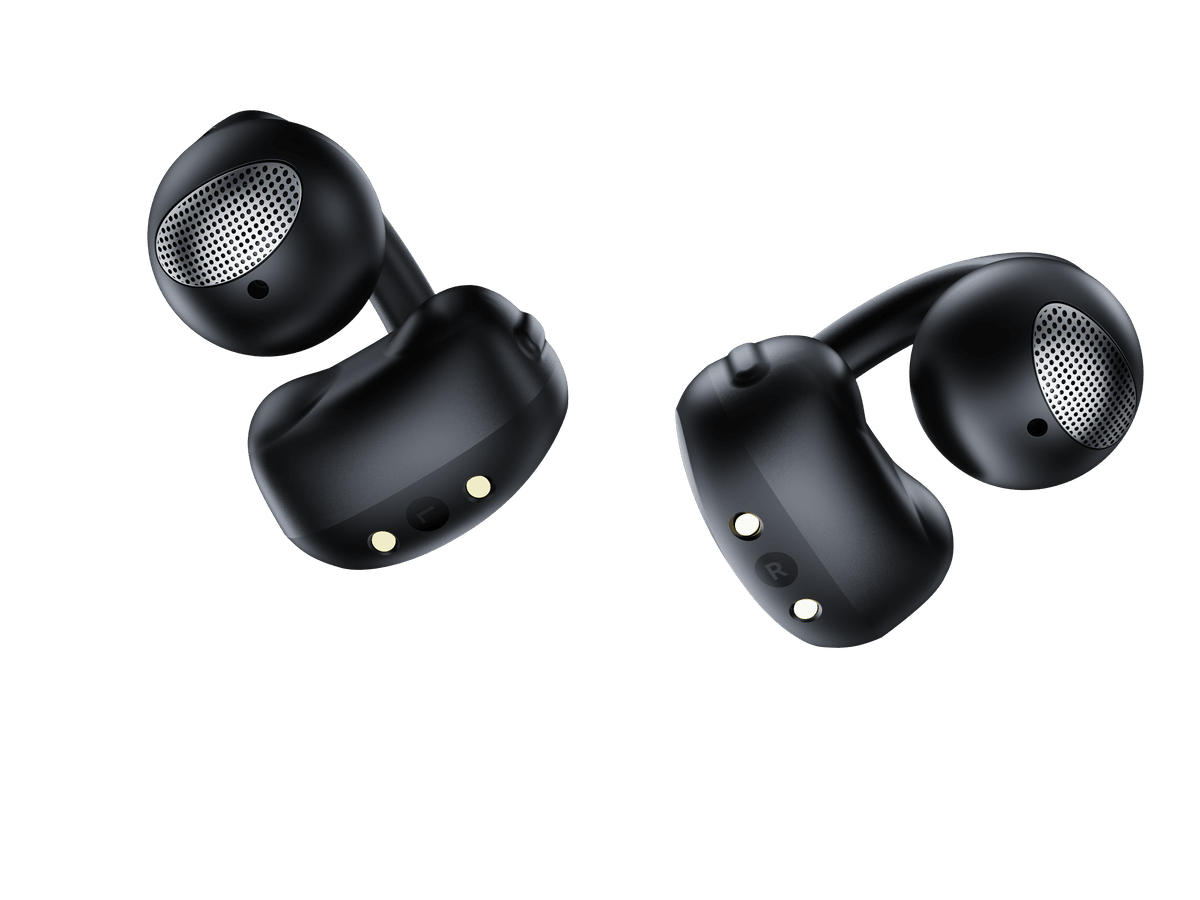
In 2024, Apple brought FDA-cleared OTC hearing aid functionality to AirPods Pro 2 — a sealed, in-ear TWS form factor. The significance wasn't the product; it was the signal: a consumer-electronics company reached tens of millions of everyday users with a hearing-health feature. That path from consumer earbud to cleared hearing device is now proven. The open-ear, stem-free form factor — what the industry calls OWS (open wearable stereo) — is the logical next step: it keeps the ear canal unobstructed, which is both what general consumers already prefer in an earbud and the more forgiving fit for someone with mild-to-moderate hearing loss who doesn't want to look like they're wearing a hearing aid. And unlike a sealed TWS earbud, which after a while can leave the ear canal feeling blocked and like there's a foreign object wedged in it, OWS is built for all-day wear — comfortable enough to stay in from morning to night.
The architecture
Every OWS algorithm on this page runs on that architecture — SDH makes it programmable, AI makes it intelligent.
The Foundation
Software-Defined Hearing
The Evolution
AI-Defined Hearing
Our OWS engineering
Our OWS is engineered to the same technical baseline as professional hearing instruments: wide dynamic range compression, professional-grade feedback suppression, ultra-low latency, and full-bandwidth frequency response covering the core speech range — technology that used to exist only in clinical settings, now built into a form factor indistinguishable from an ordinary pair of earbuds.
For the hearing-impaired user, that means confidence: nothing about the device signals "hearing aid." For a consumer-electronics brand, it means a genuine bridge product — one earpiece platform that can serve both a hearing-health customer and a general audio customer, without a separate redesign.
The problems that keep most teams out of this category
(1) Acoustic feedback. A sealed earbud like TWS is relatively easy to solve this — the seal itself blocks the loop between speaker and microphone. Open-ear removes that seal, so the amplified output from the speaker gets picked up again by the microphone, and the two can lock into a feedback loop: at best, coloration and distortion; at worst, sustained howling. The harder part is that this path isn't static — it drifts continuously as the user turns their head, touches the device, or moves near a wall or table. Conventional adaptive feedback cancellation, tuned for a sealed and largely static acoustic environment, faces a genuine tradeoff in that kind of dynamic open field: push suppression too hard and it distorts speech; leave it too conservative and howling breaks through. It's a gap that sits between two industries — consumer-audio ANC teams generally haven't built for it, and traditional hearing-aid algorithm teams have mostly optimized for sealed form factors. Lyratone's feedback-suppression algorithm was built specifically for the open, dynamic case.
(2) Processing latency and the comb-filter effect. In an open ear, the ear receives two versions of the same sound at once: the natural sound arriving directly through the air with no delay, and the amplified version that's gone through microphone capture, processing, and speaker output — which takes time. When that gap gets large enough, the two signals cancel each other out at specific frequencies as they combine in the ear canal, producing a metallic, hollow, comb-filtered sound that measurably hurts speech clarity. International OTC guidance generally points to a 15ms ceiling on processing delay; that's achievable in a sealed TWS design, but the heavier AI processing needed for open-field speech enhancement makes holding that line substantially harder. Historically, the only way to reliably beat it was a dedicated ASIC — expensive to develop, inflexible, and slow to iterate. Lyratone's software-only pipeline runs at 7ms, well inside the 15ms ceiling, without any dedicated hearing chip.
(3) Bass enhancement. Open-ear earbuds physically leak low frequencies — the seal a sealed earbud relies on for bass response simply isn't there, which typically leaves open-ear audio sounding thin. Lyratone's bass-enhancement algorithm isn't a simple EQ boost: it uses intelligent harmonic compensation to reconstruct the low end the open design loses, with dynamic band management that keeps speech and vocals clear while bass stays full — without overpowering the mix or compromising awareness of the surrounding environment.
Specifications
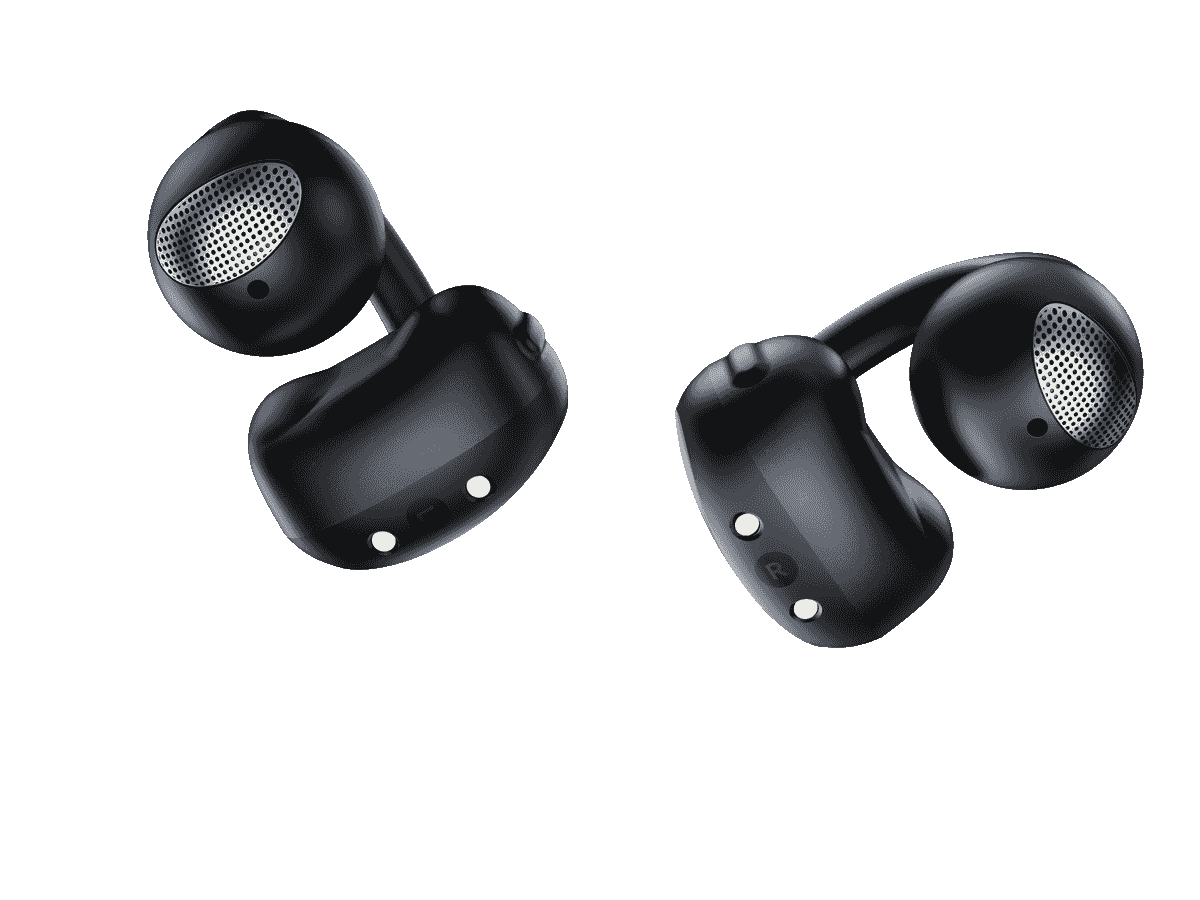
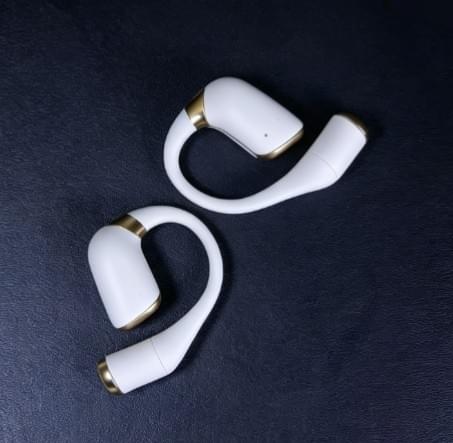
Ear-clip style OWS
- OTC hearing aid

Ear-hook style OWS
- OTC hearing aid
Who this is for
Hearing aid brands
Brands that want an OWS form factor to reach younger users and mild-to-moderate cases who won't consider a traditional hearing aid.
Consumer audio brands
Teams that already ship an open-ear or TWS line and are evaluating a hearing-health extension as the natural next SKU.
Wearable / smart-hardware ODMs
Manufacturers looking for a higher-margin, differentiated device to offer brand customers beyond commodity TWS.
How you can work with us
Software — LyraOS
License the OWS algorithm suite — feedback suppression, bass enhancement, WDRC — into hardware you already control.
PCBA module — LyraCore
Algorithm and chipset integration on one board, tuned for open-ear acoustics, ready to drop into your industrial design.
Full device — LyraHearing
A certified, ready-to-brand OWS device — clip-on or ear-hook — so you can launch without building a hearing-technology team.
Built on an IP-independent platform
Lyratone's OWS algorithms are self-developed and independently patented, built on the same architecture that powers our prescription and hearing-protection lines: Software-Defined Hearing as the foundation, AI-Defined Hearing as the evolution. That means your OWS product keeps improving through software updates rather than a hardware redesign — and it means you're never one licensing renewal away from losing the technology your product is built on.
See why an IP-independent partner matters →